Crab Line Icon: Marine Animal Sea Shell for Creative Projects
When you're building a brand or designing a piece of marketing material, the imagery you choose speaks volumes before a single word is read. We often focus heavily on typography—choosing between a bold serif font or a clean sans serif font—but the icons and illustrations used alongside that text are just as critical. They provide context, break up text, and add personality. This is where the Crab Line Icon collection comes into play. It’s not just a picture of a crustacean; it’s a versatile set of design assets that captures the essence of marine life with clean, modern lines.
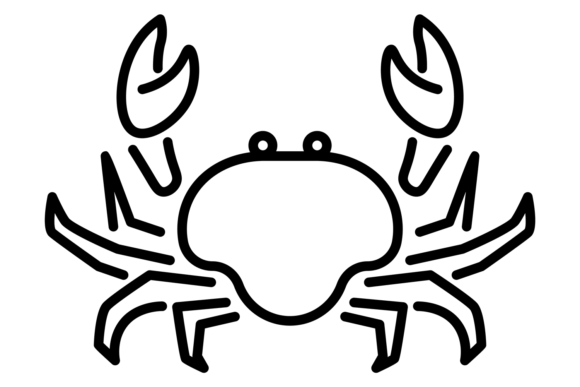
The collection typically features a marine animal and a sea shell isolated on a white background. This isolation is key for designers. It means the crab line icon can be dropped into almost any layout—whether it’s a website header, a business card, or a packaging design—without fighting with a busy background. The "line" aspect implies a stroke-based style, which offers a lighter visual weight than filled vector shapes. This makes it perfect for modern typography pairings, where you want the graphic to support the text rather than dominate it.
Visual Style and Personality: More Than Just Seafood
At first glance, a crab might seem like a niche subject, but the style of the icon changes everything. A line icon approach usually strips away unnecessary detail, focusing on the recognizable silhouette and essential features like the claws and legs. This minimalism is what gives the asset its versatility. It feels contemporary, clean, and professional. Whether the lines are uniform in width or have a slight taper, the result is a graphic that feels intentional and crafted, rather than a generic clipart image.
The inclusion of the sea shell expands the utility of the set significantly. Shells are universal symbols of the ocean, protection, and natural beauty. Together, the crab and shell create a small visual narrative. For a brand identity focused on seafood restaurants, coastal tourism, or even skincare brands using marine ingredients, these icons provide an immediate, non-verbal connection to the product. The personality here is approachable and organic, yet the execution is sleek enough for corporate use in marine biology reports or aquarium educational materials.
Strategic Applications: Where to Use These Assets
Understanding where a crab line icon fits best requires looking at the broader context of your project. As a designer or content creator, you need assets that are flexible. Here is where this specific style shines:
- Logo Design and Branding: A simplified crab or shell can serve as the cornerstone of a logo mark. Because the asset is available in formats like SVG and transparent PNG, it can be scaled up for signage or scaled down for a favicon without losing quality. This is essential for maintaining a consistent brand identity.
- Packaging Design: If you are an entrepreneur selling canned tuna, artisanal salts, or beach-themed candles, the line art style looks incredibly sophisticated on physical packaging. It suggests a premium product, especially when printed in a single color like gold foil or navy blue.
- Web and App Design: In the digital space, web design relies heavily on intuitive navigation. A crab icon can serve as a category marker for a restaurant menu or a loading animation for a travel app. The clean lines ensure that the icon renders crisply on high-resolution Retina screens.
- Social Media Graphics: Social media graphics need to be eye-catching but not cluttered. Using a marine animal icon in a corner of an Instagram post or as part of a story highlight cover adds a professional touch that separates amateur content from polished branding.
Influence on Brand Perception and Audience Engagement
Every design choice influences how your audience perceives your business. Using a crab line icon conveys a specific message: you are detail-oriented and connected to nature. In editorial design, such as a magazine layout or a blog post about coastal travel, these icons act as visual anchors. They break up long blocks of text, improving the reader's experience and readability.
Consistency is another major factor. If you are a small business owner or a blogger, using a cohesive set of icons—like the crab and shell together—creates a visual language that your audience begins to recognize. This is the foundation of strong visual hierarchy. You aren't just showing random pictures; you are building a system where the imagery supports your message. For example, using the shell icon next to a "Features" list and the crab icon next to a "About Us" section creates a subtle, professional order.
Practical Guidance for Designers and Creators
If you are considering adding the Crab Line Icon. Marine Animal. Sea Shell set to your toolkit, here are a few practical tips to maximize its value.
Evaluating Project Fit and File Formats
Before purchasing or downloading, check the file formats. The mention of EPS, JPG, SVG, transparent PNG is a strong indicator of a versatile premium font or asset package. EPS and SVG are vector formats, meaning they are mathematically defined and infinitely scalable. This is crucial for logo design or large-format printing like trade show banners. JPGs are rasterized and best for web use where vector support might be limited, though PNGs are usually preferred for web due to their transparency capabilities.
Font Pairing and Visual Balance
Icons need to work alongside your chosen typeface. Because the crab line icon has a delicate, linear quality, it pairs beautifully with a wide range of fonts. It can soften the rigidity of a geometric sans serif font or add a modern edge to a classic serif font. If you are using a script font or handwritten font for a wedding invitation or a boutique menu, ensure the icon's stroke weight doesn't make the text look too thin by comparison. Balance is key; the icon should complement the text, not compete with it.
Licensing and Commercial Use
For entrepreneurs and marketers, the legal side of design assets is just as important as the aesthetic. Always verify the licensing. Most assets sold on marketplaces allow for commercial use, which covers your packaging design, website, and advertising. However, check if the license covers "print on demand" or merchandise if you plan to put the crab on t-shirts or mugs. Respecting these boundaries ensures your business remains professional and legally sound.
Ultimately, the Crab Line Icon collection is a testament to how specific design assets can solve broad creative problems. It offers a clean, professional way to incorporate marine themes into your work, whether you are designing a restaurant menu, a travel brochure, or a new brand identity for a coastal startup. By choosing high-quality, versatile graphics, you elevate the entire project, ensuring that the visual language is as polished as the words you write.